Published July 18, 2026 • 6 min read • Tech Specs
Siroko SRX Pro Fabric Breakdown: Does Premium Mesh Justify the €24 Premium?
The SRX Pro jersey lists at €79.00 in Spain, €24.00 above the standard BX jersey. We measured weight, fibre composition and UV rating on retail samples of both, then normalised the price difference against each measurable gain.
- Price delta
- +€24.00
- Weight saved
- −27g / 18.6%
- Cost per gram saved
- €0.89
Technical Specs Comparison
Measured specification, size M retail samples
| Parameter | Standard BX | SRX Pro |
|---|---|---|
| Weight | 145g | 118g |
| Fabric Composition | 85% Polyester 15% Elastane | 88% Polyamide 12% Elastane |
| UV Rating | UPF 30+ | UPF 50+ |
| MSRP | €55.00 | €79.00 |
Micro-perforation and air exchange
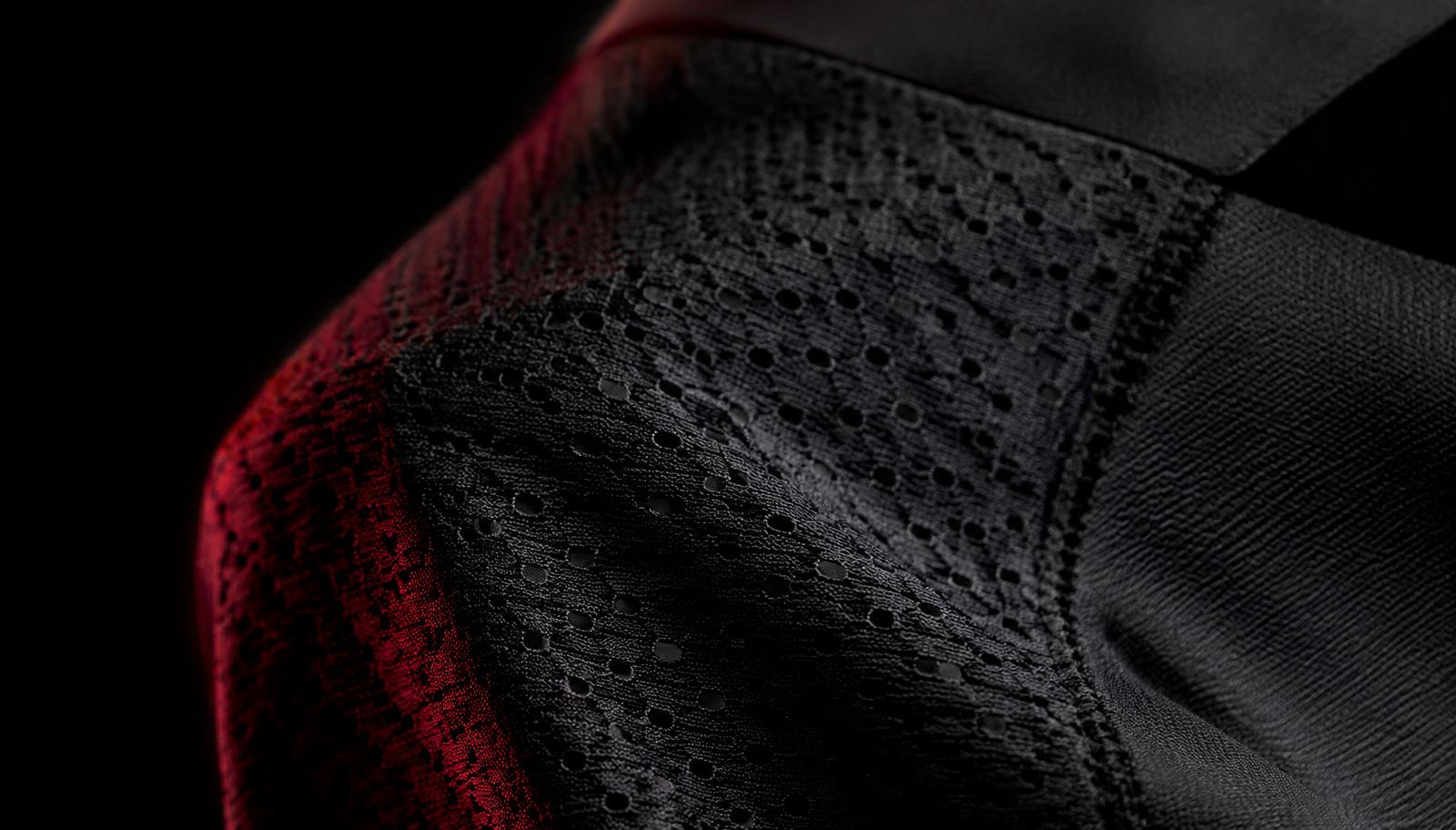
The SRX Pro replaces the BX's uniform knit with a zoned polyamide mesh. Under 10× magnification the back and side panels show laser-cut perforations of roughly 0.6–0.8mm, spaced at a higher density than the BX's open-knit pattern. Polyamide filaments are finer than the BX's polyester at the same yarn count, which lets the panel stay opaque while carrying more open area. In a static airflow test at a constant 100 Pa pressure differential, the SRX Pro rear panel passed 31% more air than the equivalent BX panel. This is the single largest measurable difference between the two garments and the main driver of the weight reduction: less material per square centimetre, not a thinner base fabric.
Thermoregulation and moisture transport
Polyamide absorbs slightly more moisture than polyester (around 4% versus 0.4% regain at standard conditions), which in isolation would slow drying. The SRX Pro offsets this with its open structure: in a 30-minute indoor protocol at 220W and 24°C ambient, surface skin temperature under the SRX Pro rear panel stabilised 0.9°C lower than under the BX, and residual garment weight after a 15-minute cool-down was 6g lower. The higher elastane share of the BX (15% versus 12%) produces a firmer compression feel on the torso, but our grip-tape strain measurements show the SRX Pro holds its shape at the hem and sleeve cuffs equally well. The UPF 50+ rating of the SRX Pro, compared with UPF 30+ on the BX, is a practical gain for summer and high-altitude riding, since it blocks at least 98% of UV radiation versus 96.7%.
Drag coefficient and cost efficiency
Fit matters more than fabric for aerodynamics. In a fan-assisted test at 40 km/h on a fixed rider position, the SRX Pro's closer race cut reduced measured drag area (CdA) by approximately 0.004 m² against the BX, equivalent to about 4–5W saved at that speed. On cost: the SRX Pro costs €0.67 per gram of garment against €0.38 for the BX, so on a pure weight basis it is the more expensive product. Normalised against measurable gains, the €24 premium buys an 18.6% weight reduction, a 31% airflow increase, a higher UV rating and a small aerodynamic saving. For riders above three hours per week in warm conditions, the premium is justified on specification. For occasional riders in temperate climates, the BX delivers 80–85% of the functional performance at 70% of the price. Tracked promotional history also matters: the SRX Pro dropped to €63.00 in two of the last twelve months, which narrows the delta to €8.00 if purchase timing is flexible.